


Irkutsk scientists have found a bacteriophage that fights against the pathogen of a dangerous infection
Text Author: Yulia Mamontova
Regional Newspaper No. 78 (2868) dated July 16, 2025
Original text: https://www.ogirk.ru/2025/07/16/bajkal-lechit
Limnological Institute SB RAS is called the main one for Lake Baikal. Its employees not only conduct complex research of the lake, discover every year new types of life in it, but also receive patents for inventions. One of the latter concerns the bacteriophage, which fights the dangerous infectious agent. Doctors are already interested in the discovery. Our correspondents learned about this and other recent results of the work of limnologists.
Viruses are the most numerous inhabitants of plankton.
To start, we should talk more about bacteriophages. These bacteria killers are actually viruses by nature. It seems like the topic of viruses is on everyone`s mind due to the recent pandemic. However, the world science began detailed studies of microscopic particles only at the end of the 19th century. The topic of water viruses only started to be taken seriously to the end of the last century. This makes sense since the size of viruses is measured in nanometers, which is one billionth of a meter. Scientists simply didn`t have the proper tools to examine them. However, as instruments improved, the microscopic world presented itself on full display.
Only in recent decades it has become known that in the water of the seas and oceans the number of viral particles significantly exceeds the number of all other organisms of the plankton community. In one liter of sea water, viral particles can be about 10 billion.
Viruses play a crucial role in regulating the general population of other microscopic organisms. Imagine a number with 23 zeros. That`s how many marine bacteria are infected by bacteriophages every second. The dissolved and suspended material left over from this “cleanup” is reused by the bacteria. Therefore, aquatic viruses significantly contribute to the functioning of their hosts.
This knowledge about the role of viruses in the circulation of organic carbon and other elements in the World Ocean has changed the existing views on the “microbial loop” of aquatic ecosystems. However, until recently, there was very little information about viruses in freshwater bodies. This also applied to Lake Baikal.
A new link in the “microbial loop” has been found
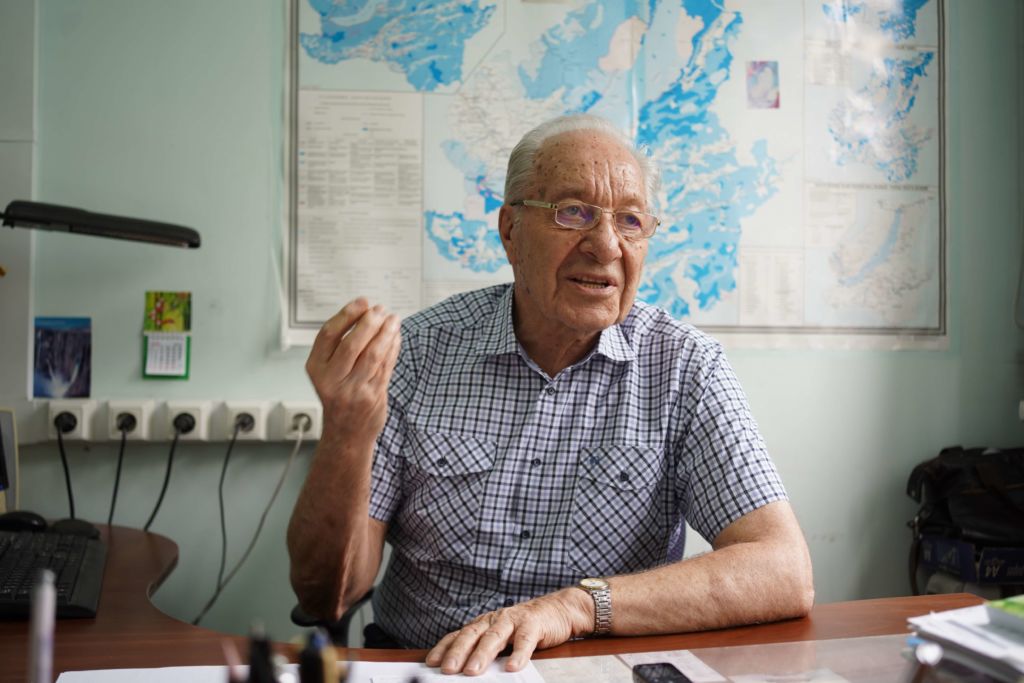
– The first serious scientific work that the water of the seas and oceans contains a huge number of bacteriophages appeared in 1989. I have also been interested in virology for a long time. But then we did not have equipment for studying them, because in the case of bacteriophages, we even need not just an electronic, but a special transmission electron microscope, “recalls Valentin Dryucker, chief researcher at the Laboratory of Aquatic Microbiology, LIN SB RAS, Doctor of Biological Sciences, Professor, Academician of the Russian Ecological Academy. – In the meantime, we have just started our research on bacteria in Lake Baikal and proposed a modern microbiological monitoring scheme to assess the water quality throughout the entire lake. Later, thanks to Mikhail Alexandrovich Grachev, who was the director of the institute at that time, we got the microscope and other equipment we needed for our research. In the early 2000s, we prepared the first scientific work on the Baikal viruses and that this is in fact a new chain in the Baikal ecosystem. Some of the colleagues at the scientific council even then were surprised: “What viruses are in Lake Baikal? We have not heard of such.”.
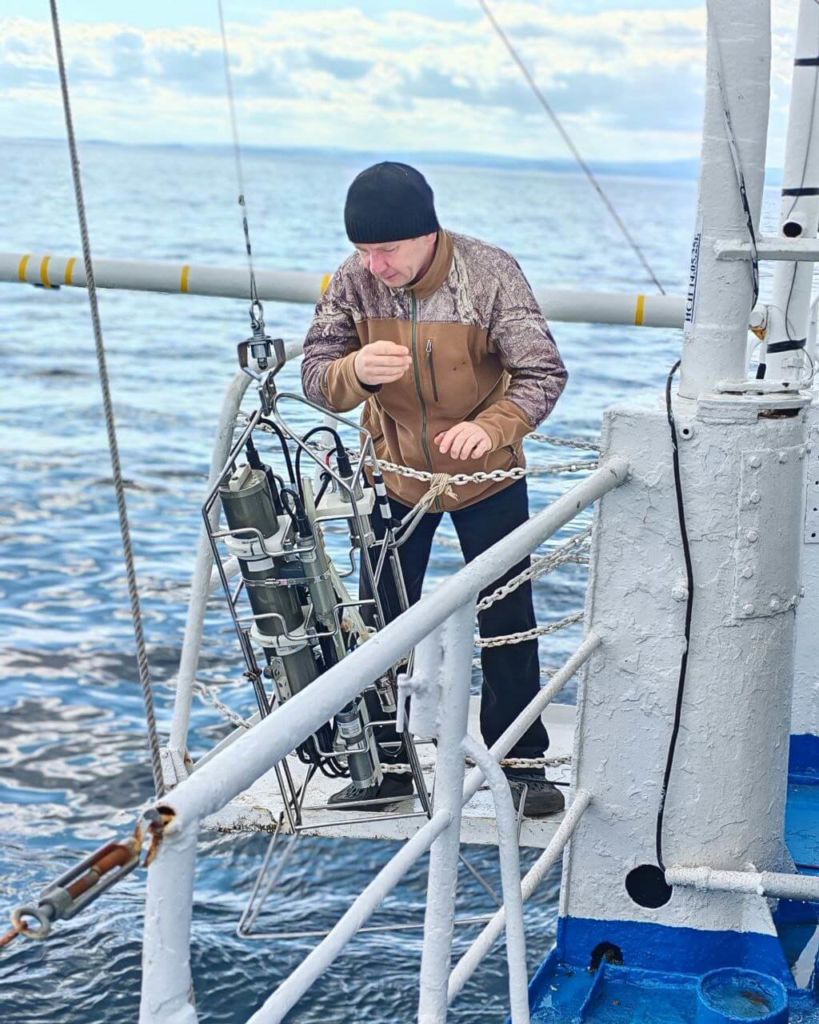
In 2020, a group of scientists from the Laboratory of Aquatic Microbiology of LIN SB RAS, led by Valentin Druycker, published the monograph “Bacteriophages of Lake Baikal.” By modern methods, limnologists have established a wide variety of the Baikal viruses, determined the features of their composition and range of sizes, as well as the patterns of the time and spatial distribution of their number to maximum depths.
Specialists have detailed the genetic diversity, composition, and structure of DNA-containing viral communities in the pelagic zone of the lake. We have prepared a modern scheme of the “microbial loop” of Lake Baikal, which included a previously unknown viral link. This significantly enhanced the structural-functional organization of the ecosystem in the oldest and deepest freshwater body on Earth.
It looks like a hammer, but in reality, it`s a parasite.
Microbial loop or food web consists of a variety of bacteria, tiny algae, infusoria and other smallest inhabitants of plankton communities. Biogenic substances are constantly held inside them. Scientists emphasize that the preservation of high water quality in Lake Baikal is crucial, along with the development of specific measures to prevent pollution of this unique body of water. Research of the structure and functioning of the lake`s microbial population plays a significant role, especially now during the period of global warming. After all, microorganisms play the main function of self-purification in waterbodies and streams.
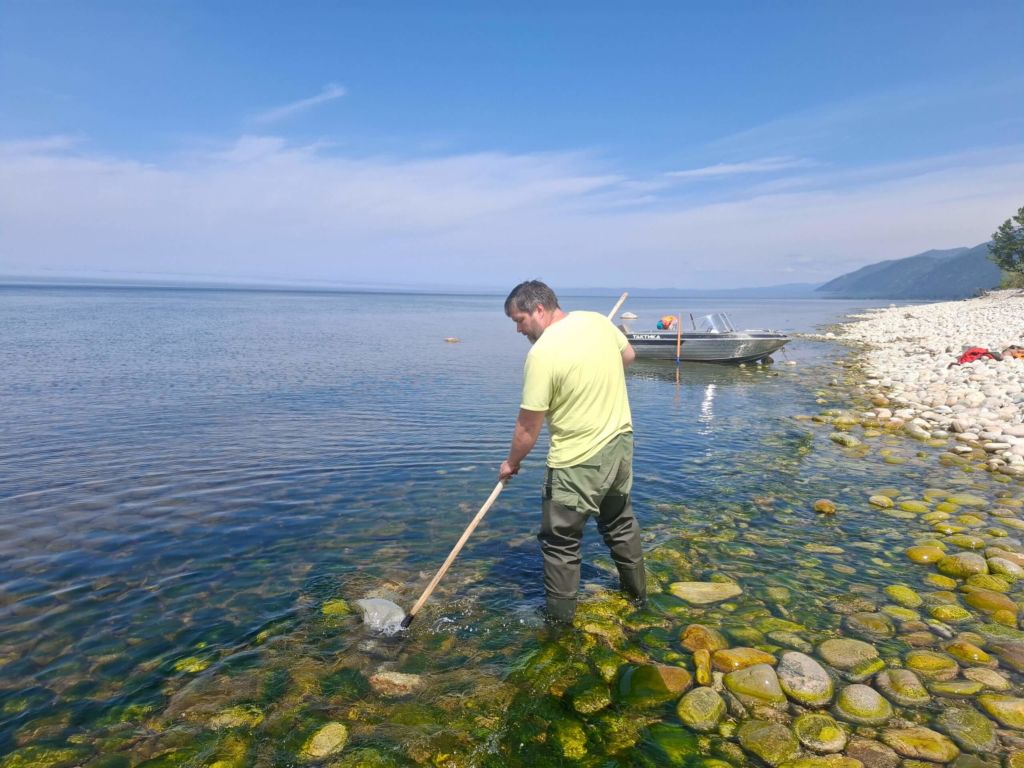
– “Together with scientists from Moscow, St. Petersburg, Kazan and other Russian cities, we have proved that bacteriophages live in the entire water column of Lake Baikal,” continued Valentin Dryucker. - By transmission electron microscopy, we first found, identified and studied nine families of bacteria viruses in Lake Baikal. We found four morphological phage types, they are probably endemic. In the process, a complete metagenomic study of a giant virus was carried out, which represents a new genus of viruses of the Caudoviricetes class according to the modern taxonomic international classification ICTV, included in it as the “Baikal virus.”
Those whose existence even recently doubted colleagues at the institute, Valentin Valerianovich shows us on the computer screen. Bacteriophages in all their glory. Some look like hammers, others like whirl-bone, others like fly swatters, and the fourth like individual honeycomb cells. Some of them have long tails, others have no any tails. It's a heartbreaking scene: these tiny particles have surrounded a lonely bacterium and are injecting something inside – as it turns out, it`s DNA. The already short “days” of the victim are numbered, because bacteriophages are absolute parasites.
They treat more efficient than antibiotics
The nature of viruses presents another challenge for research. Observing a minuscule organism under a microscope is only half the battle. It is essential to cultivate not only the virus itself but also its host under laboratory conditions. Unlike the cultivation of a colony of a common intestinal bacterium, this process is considerably more labor-intensive. Furthermore, numerous other methods employed in virus research can be quite costly, even from a financial perspective. Nevertheless, this field holds significant promise for discoveries and opportunities.
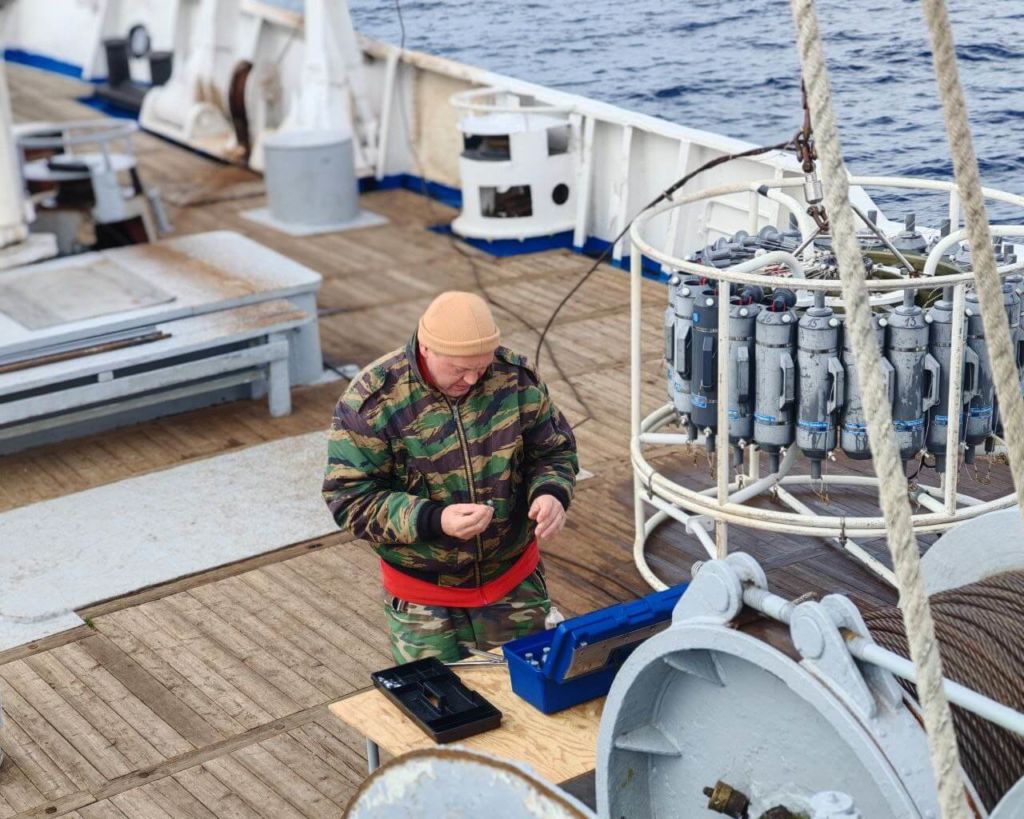
– We have already registered two patents for inventions in 2023 and 2024. Since bacterial viruses are very highly specific and kill only their hosts, we found in Lake Baikal and isolated specific bacteriophages that exclusively destroy Pseudomonas aeruginosa bacteria. They are the agents that cause infections or complications linked to this Pseudomonas aeruginosa. Currently, it is not treated with antibiotics. We conducted resistance experiments – we added bacteriophages to the antibiotics. As a result, over 90% of the bacteria were killed. Our invention has caught the attention of clinics, the scientist clarified.
New species and old problems
In addition to viruses, researchers from LIN SB RAS have recently discovered other forms of life in Lake Baikal. We are talking about invertebrates. In collaboration with colleagues from the I.D. Papanin Institute of Biology of Inland Waters of the Russian Academy of Sciences, limnologists have described five new species of microturbellarians, two species of harpacticoids, and two species of nematodes. This significantly enhances the composition of the unique Baikal fauna.
In the littoral zone of the open lake, within bays and gulfs at depths of 20–25 meters, a new species of daphnid Chydorus sf.biovatus (Frey) has been discovered. This species was previously found in North America, Central Yakutia, and Kamchatka. Males and females of the Palearctic species of harpacticoids Canthocamptus (Canthocamptus) microstaphylinus (Wolf, 1905) were discovered in the coastal area of Posolsky sor. This marks the first finding in Lake Baikal, within the Baikal region and Siberia as a whole, significantly extending the species` habitat range.
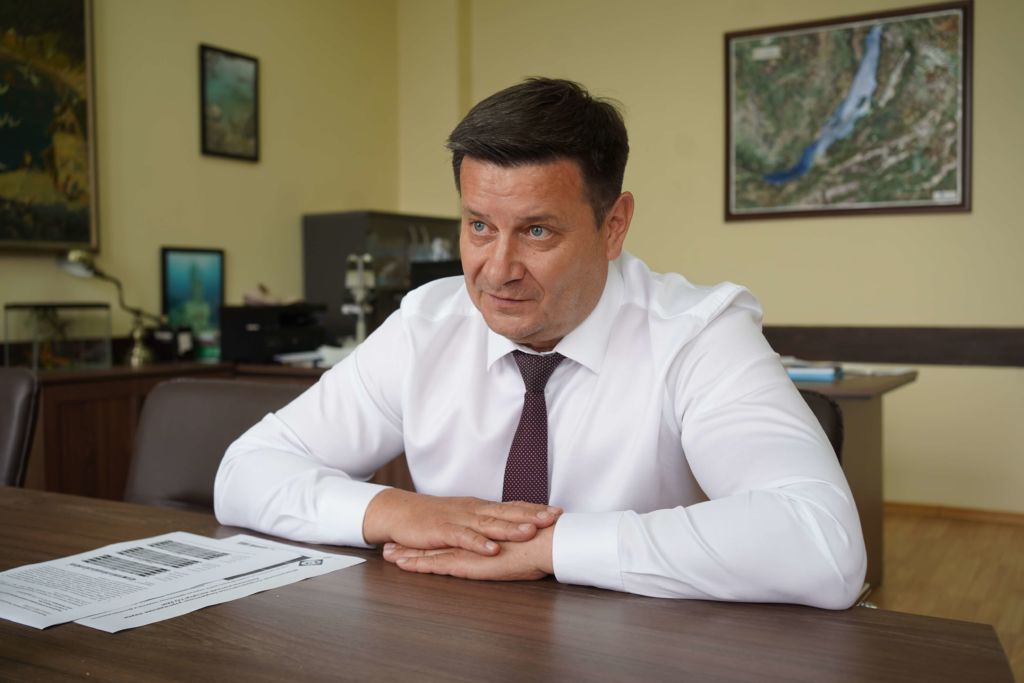
Additionally, the institute has compiled the results of extensive research on various forms of nitrogen and phosphorus in river waters and in the snow cover of the southeastern and southwestern shores of the Baikal. These data were collected from 2019 to 2023 and compared with the data from 1986 to 1987. It was found that the concentration of nitrate nitrogen in the waters of all tributaries of Southern Baikal has increased, as the nitrogen input from the atmosphere has risen by one and a half times over the past 30 to 40 years. The concentrations of mineral forms of phosphorus have also increased in the snow and at the mouths of watercourses along the southwestern coast. Notably, in Listvyanka, there has been a significant impact from economic activities. Conversely, during the peak of the coronavirus pandemic in 2020-2021, when tourist numbers were low, these indicators were lower. By the way, the spirogyra in Listvyanka settlement at the bottom of Lake Baikal still feels great: it has already made an expansion, - commented Andrey Fedotov, director of LIN SB RAS, Doctor of Geological and Mineralogical Sciences.
Young omul is growing in Lake Baikal.
Interesting for many people, researchers conducted studies regarding the Baikal omul. During hydroacoustic and trawling operations in the Selenga shallow waters, which is the primary fishing area of the Baikal, employees of LIN SB RAS discovered that although the biomass of omul decreased fourfold from 2007 to 2020, the population of young fish is increasing due to the generations from 2019 to 2024. These generations are expected to contribute to biomass growth in the next four to six years, providing hope for a potential reconsideration of the fishing ban on this species in the future.
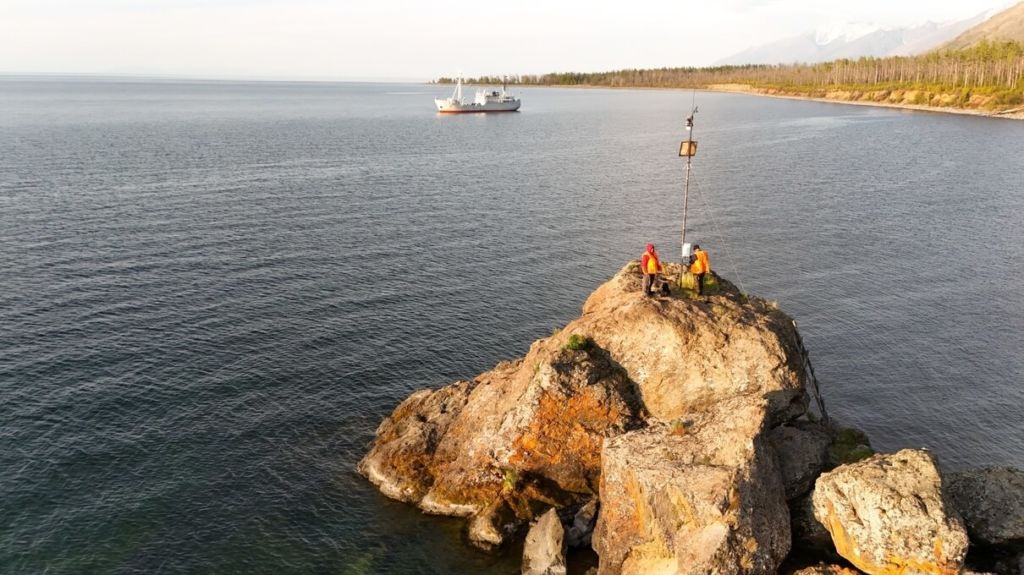
We also continue to study extreme events in the Lake Baikal basin. For the first time, our scientists, based on the analysis of air temperature from May to September in 57 years, found that not only the number of hot days, but also tropical nights increased in Lake Baikal, when the air temperature at night does not drop below +20 degrees Celsius. Extreme events became more frequent after 1990. But the water temperature of Lake Baikal itself, according to our monitoring, is generally not growing. Even when it gets warmer somewhere, a storm comes and brings colder water to the site again. The different isotopic composition of the water entering and staying in the lake remains incomprehensible. Even within all three basins of Baikal, the isotopic composition varies; for instance, in the northern part of the lake, the water is comparatively “lighter.” The reasons for this phenomenon are yet to be determined, as summarized by Andrey Fedotov.
The scientific interest to Lake Baikal is increasing. This is evidenced by the outcomes of recent conferences addressing the issues related to the Sacred Sea. Over 300 reports have already been announced at the VIII International Baikal Vereshchagin Conference, which LIN SB RAS will hold in honor of the 100th anniversary of the start of the Baikal expedition of the USSR Academy of Sciences. The event will take place in Irkutsk on September, 8-14.