


Expedition onboard the R/V Akademik V.A. Koptyug on June 5-20, 2025
On June 5-20, 2025, the expedition onboard the R/V Akademik V.A. Koptyug was carried out within the State Assignment “Complex study of the coastal zone of Lake Baikal: long-term dynamics of the communities under various ecological factors and biodiversity; causes ans consequences of negative ecological processes in the lake,” No. 0279-2021-0007 (121032300180-7).
The aim of the expedition is to study biodiversity and assessment of current ecological state of the coastal zone of Lake Baikal in June 2025 under conditions of large-scale negative ecological processes in the lake.
Tasks of the expedition:
- Collection of material for further multi-year series of observations of the dynamics of biomass and taxonomic composition of natural and alien Filamenteous Algal Blooms (FAB) in Lake Baikal, places of their mass development in the coastal zone, in seasonal and inter-annual aspects (responsible Timoshkin O.A., D.B.Sc., Gula M.I.; responsible for sampling Yurgin R.A., technician);
- Collection of data on coastal release of plant detritus in zones of their mass concentrations as an indirect indicator of productivity and eutrophication of the coastal zone (rapid assessment) (responsible Nepokrytykh A.V., Cand.B.Sc.);
- Collection of phytoplankton samples to provide a multi-year series of observations of the dynamics of quantitative indicators and species composition in the coastal zone (background and in sites with anthropogenic load) (responsible Bondarenko N.A., D.B.Sc., responsible for sampling Poberezhnaya A.E.;
- Collection and analysis of hydrochemical for appropriate characterization of coastal water quality (responsible Tomberg I.V., CSc. (Geogr.), Yeletskaya E.V., junior researcher);
- Sampling zoobenthos to study qualitive composition of microturbellarians, ostracods, harpacticids, and batinellids) (responsible Alekseeva T.M., junior researcher, Krivorotkin R.S., junior researcher).
Expedition team: Dr. Sc. (Biology) Timoshkin O.A. (chief of the team), Cand. Sc. (Geology) Tomberg I.V. (deputy chief of the team), junior researcher Yeletskaya E.V., junior researcher Alekseeva T.M., junior researcher Krivorotkin R.S., lead engineer Gula M.I., leading specialist Poberezhnaya A.E., technician Yurgin R.A., technician Starov P.F. and two third-year students of Biology and Soil Science Department of ISU – Plotnikova A.S. and Chimitdorzhieva I.O.
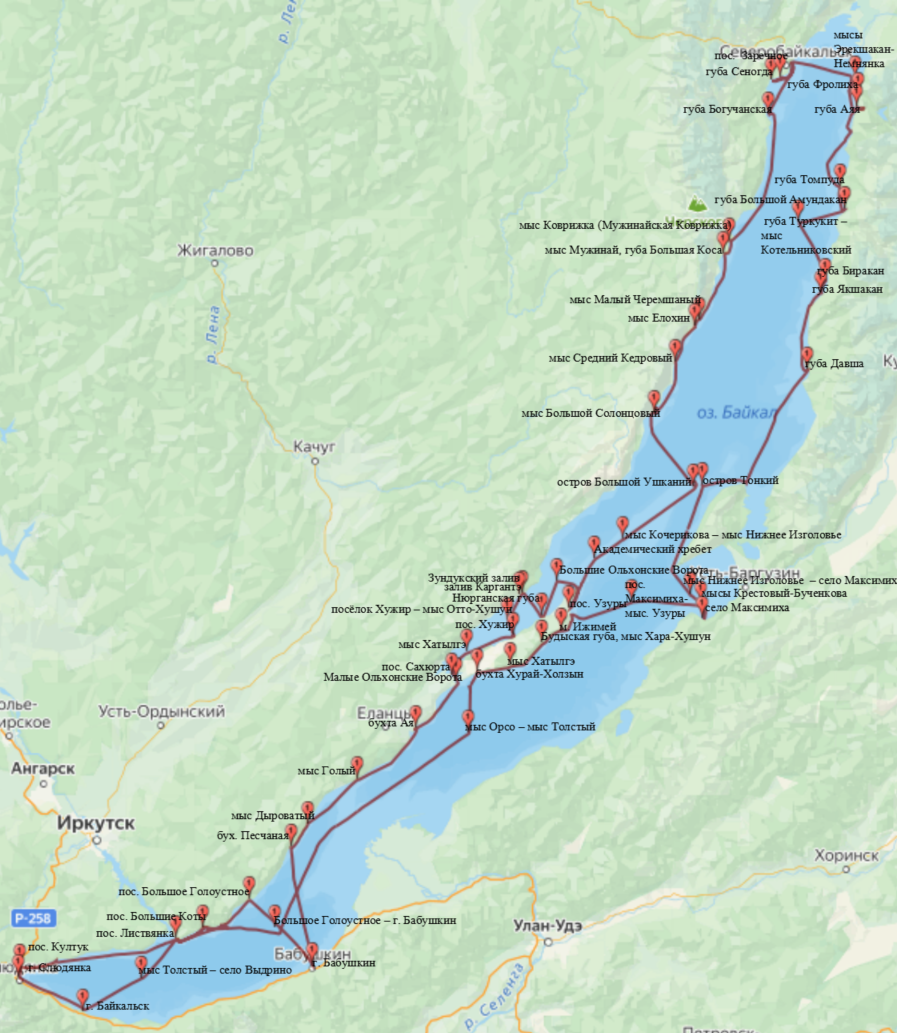
List of sampling stations (Fig. 1):
- Interdisciplinary ground at Cape Berezovy
- Listvyanka settlement
- Baikalsk town
- Kultuk settlement
- Bolshie Koty settlement, station of LIN SB RAS
- Bolshie Koty settlement, Gammarus station
- Bolshoye Goloustnoe settlement
- Babushkin town
- Peschanaya bay
- Cape Dyrovaty
- Cape Goly
- Aya bay
- Sakhyurta settlement
- Ogoi island
- Khuzhir settlement
- Kargante Cape
- Zunduksky bay
- Nyurgon bay
- Uzury Cape
- Underwater Academic Ridge
- Bolshoi Ushkaniy Island, Peshcherka bay
- Bolshoi Ushkaniy Island, Severnaya bay
- Bolshoy Solontsovy Cape
- Sredny Kedrovy Cape
- Elokhin Cape
- Maly Cheremshany Cape
- Muzhinay Cape, Bolshaya Kosa town
- Muzhinayskaya kovrizhka bay
- Boguchanskaya mountain
- Senogda bay
- Zarechnoye bay
- Frolikha bay
- Capes Erekshakan-Nemnyaka
- Ayaya bay
- Tompuda mountain
- Bolshoi Amundakan mountain
- Birakan
- Yakshakan mountain
- Davsha mountain
- Tonky island, Ushkany islands
- Capes Krestovy-Buchenkova
- Maksimikha village
- Cape Izhimey
- Cape Khara-Khushun
- Cape Khyltyge
- Khurai-Khalzyn bay
Eleven sampling stations of phytoplankton.
A total of 494 samples were collected: 217 samples to study phytobenthos, 134 hydrochemical samples, 105 qualitive samples for zoological study, 38 samples for phytoplankton characterization.
Preliminary scientific results (according to the determined tasks):
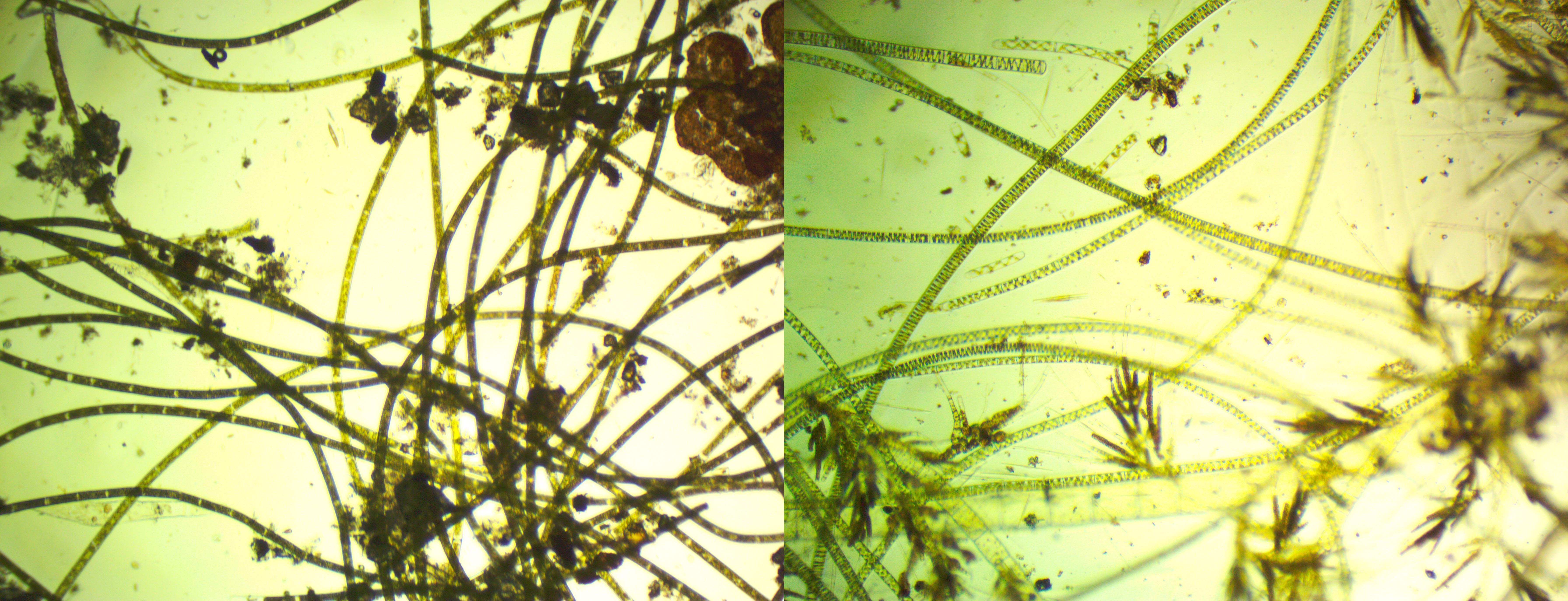
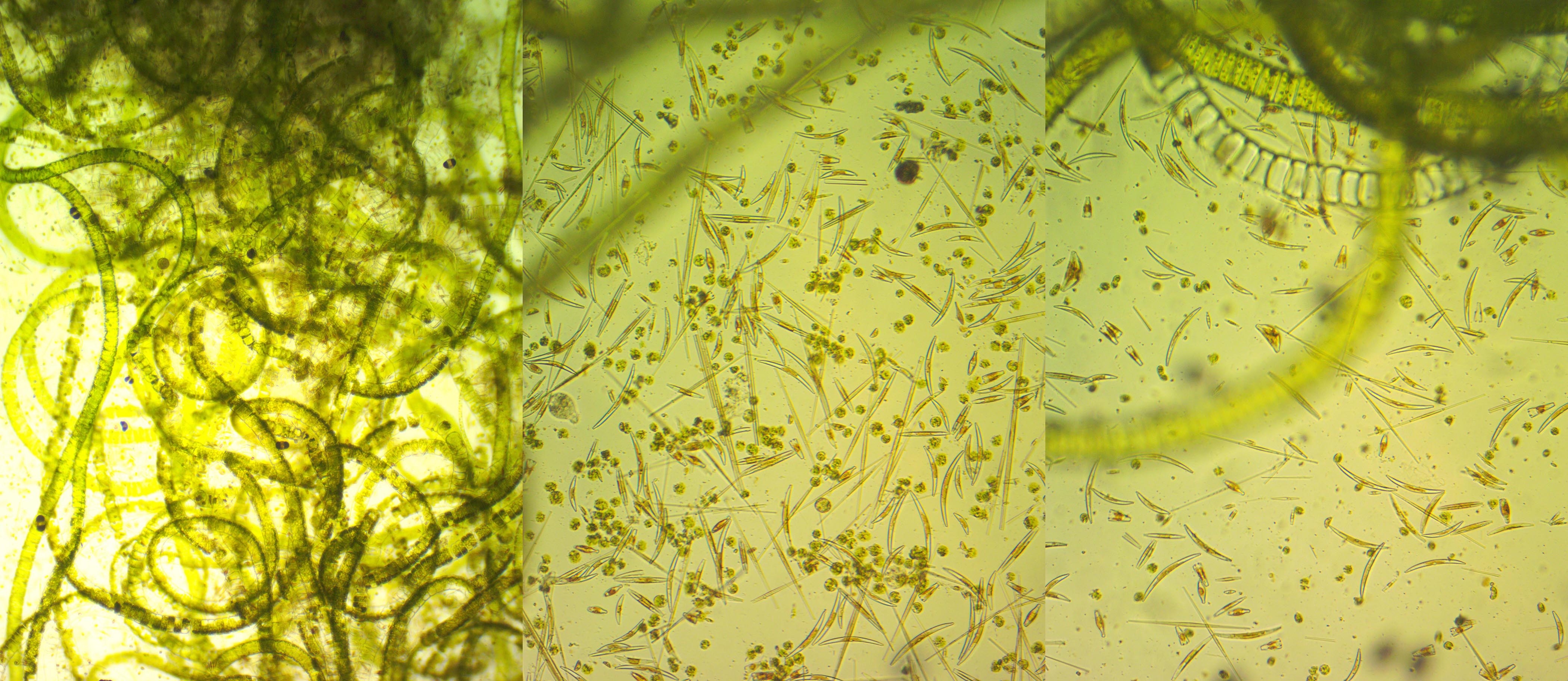
1. A preliminary microscopic analysis of living phytobenthos samples was conducted, focusing on the identification and distribution of the alien filamentous algae of the genus Spirogyra. Several thousand microphotographs of the taxonomic composition of algal communities have been produced (a preliminary analysis has been conducted, and the photos will be analyzed in detail subsequently). Preliminary results are presented in the Table.
| Range of sampling depths, m | Number of stations where spirogyra was detected | % from the total number of studied stations |
|---|---|---|
| Water`s edge–1.5 | 9 | 24% |
| 2–7 | 9 | 24% |
In general, from the water`s edge to a depth of 7 m, spirogyra filaments were found at 11 stations out of 38 studied (which is 29% of the total). Examples of micrographs with alien filaments are given in Fig. 2.
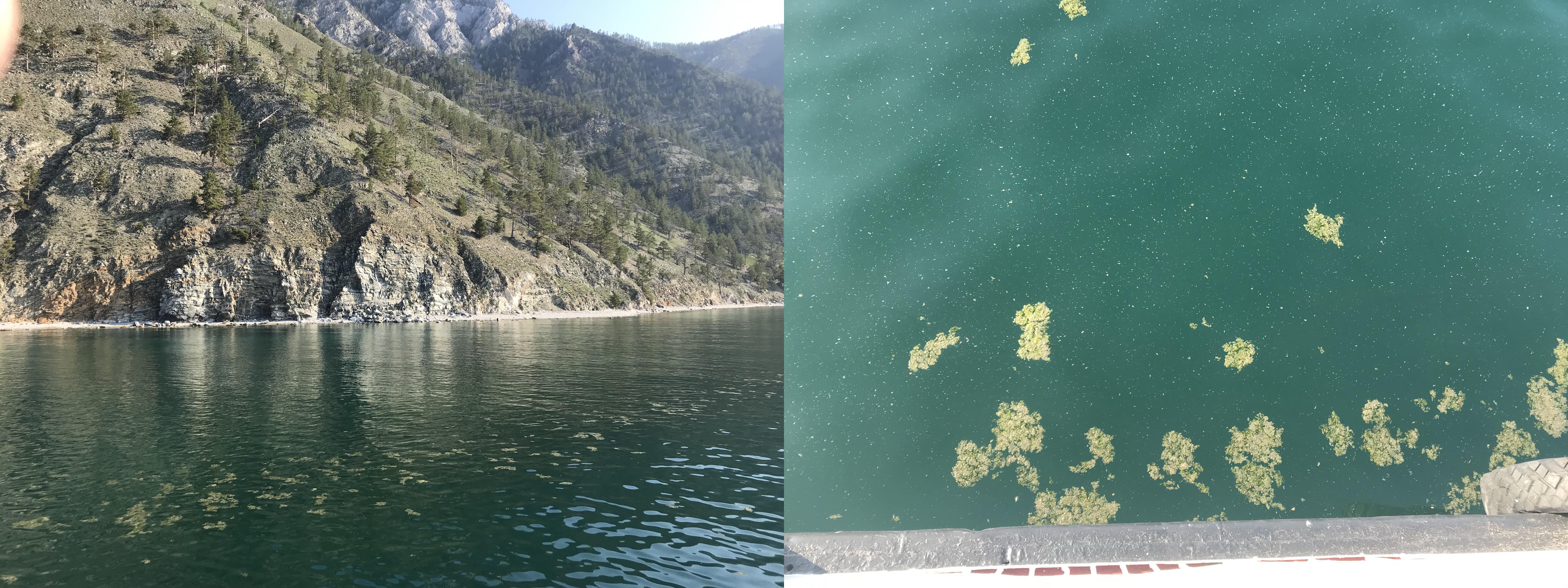
At the station opposite Cape Izhimey (eastern coast of Olkhon Island), numerous floating “spots” of filamentous algae have been recorded (Fig. 3). Microscopic analysis revealed that these are clusters of Ulothrix zonata, that have surfaced, among which a significant number of planktonic cyanobacteria, benthic diatoms of the genus Hennedia, and other algae have been identified (Fig. 4). Spots have been identified in the coastal zone (on the water`s surface 10–50 m from the shore) within approximately 1.5 km; the estimated diameter of the “spots” ranged from 10 cm to 2 m (measurements conducted by R. Krivorotkin and T. Alekseeva). For mid-June and this region, we have observed such a phenomenon for the first time. Based on an oral report from the captain of the R/V V.A. Koptug, A.N. Bityutskiy, he has observed similar patterns of mass gatherings of filamentous algae on the surface of the water in this area in previous years, but specifically in July.
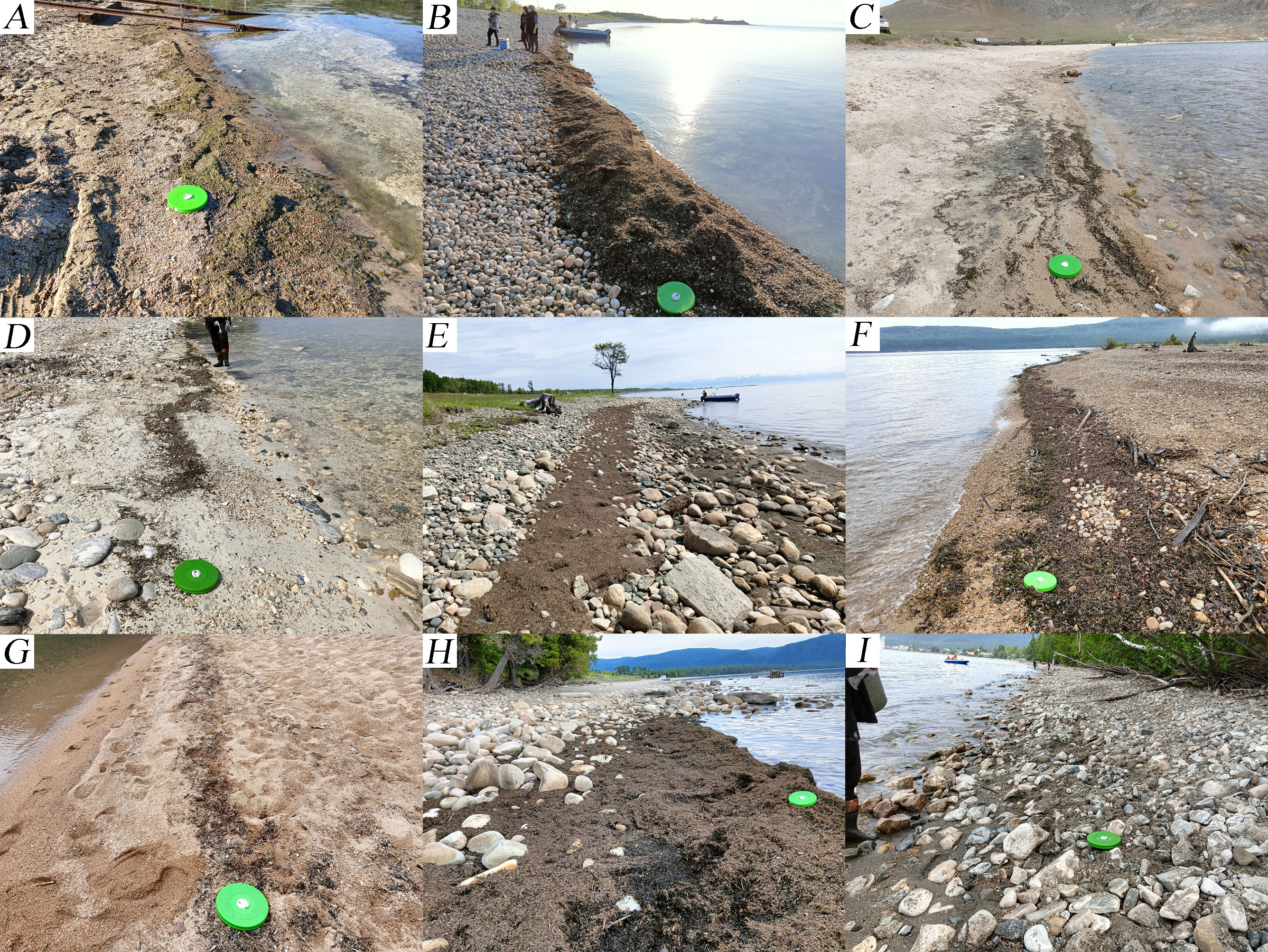
2. Coastal accumulations of detritus (CAD) have been identified at 10 out of 29 surveyed stations (Fig. 5; compiled by Krivorotkin R. and Alekseeva T.). CADs were noted at the stations of Kultuk, Babushkin, Sakhyurta, Uzury, Bolshoy Ushkaniy (formerly Northern), Zarechnoye, Frolikha, Davsha, Maksimikha, and Izhimey. A total of 42 samples were collected for the study of CADs; quantitative characteristics and the composition of the identified CADs will be analyzed under laboratory conditions.
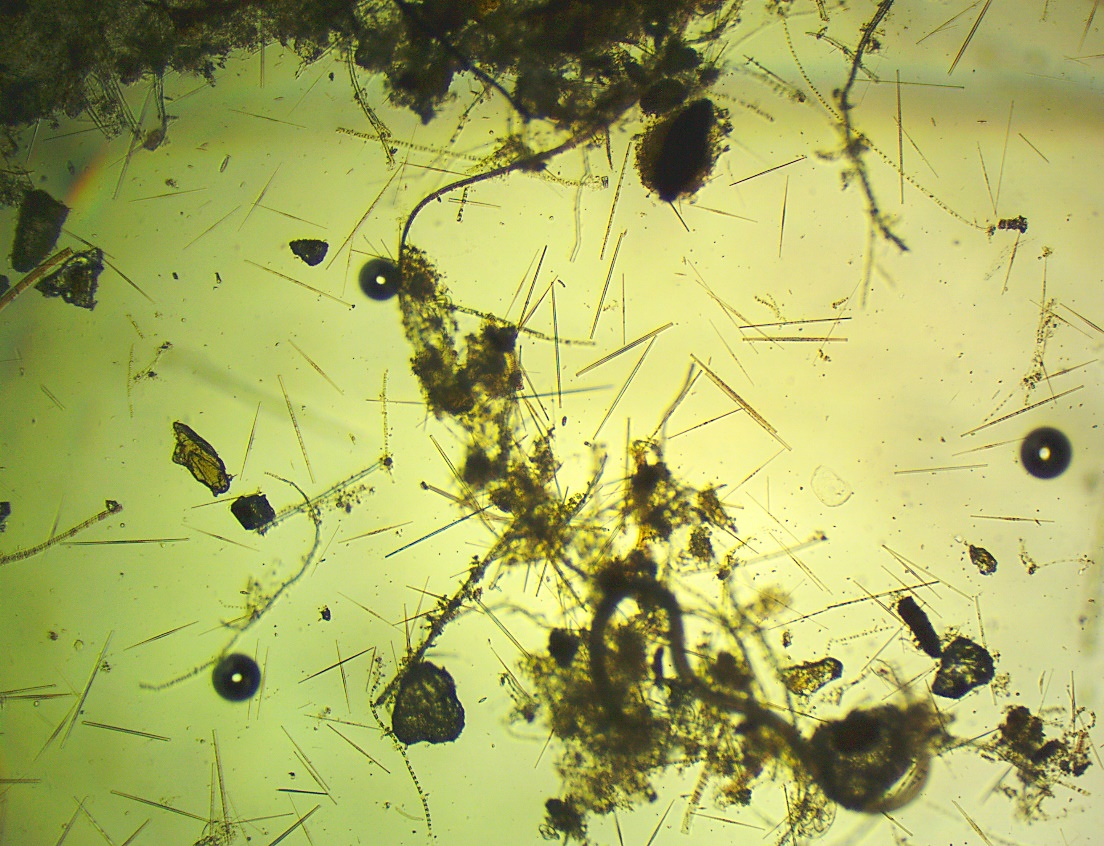
3. Phytoplankton samples are analyzed under laboratory conditions. Microscopic examination of some samples revealed that elevated concentrations of nanoplanktonic dinoflagellates (exceeding 100 thousand cells per liter) were observed in the coastal zone of all three basins of the lake, including the strait of Maloe More. We should note that in almost all samples of phytobenthos from the coastal zone, collected in three basins, sedimented cells of the dominant planktonic cyanobacteria were found on the bottom (a consequence of the prevalence of this algae in the spring plankton) (Fig. 6).
4. During the expedition, hydrochemical studies were conducted at 26 stations along the entire perimeter of the lake, resulting in the collection of 134 water samples. The temperature of the coastal waters of Baikal during the study varied: in the southern part of the lake, it ranged from 5.6 to 14.8°C, in the central basin from 3.4 to 12.4°C, and in the northern region from 7.4 to 8.3°C. The electrical conductivity of the interstitial water at the coasts exhibited a wide range of variation. The highest recorded values were found in the coast pits of the settlements of Uzury (695 µS/cm) and Zarechnoye (522 µS/cm), while the lowest was observed in the settlement of Davsha (84 µS/cm). The electrical conductivity of the water at the shoreline was predominantly similar to the values found in the Baikal, ranging from 118 to 125 µS/cm. Slightly elevated conductivity values (128-188 µS/cm) were noted in the coastal waters at sampling stations located opposite the towns of Baikalsk and Slyudyanka, as well as in the settlements of Listvyanka, Bolshoye Goloustnoye, Khuzhir, and Cape Elokhin. The concentration of dissolved oxygen in interstitial water during June ranged from trace amounts (observed at locations such as Kultuk, Bolshoye Goloustnoye, Sakhyurta, and the towns of Slyudyanka, Babushkin, and Severobaikalsk) to 10.33 mg/dm3. In the coastal waters of the lake, oxygen concentrations fluctuated between 9.09 and 16.23 mg/dm3, representing 80-160% saturation. High levels of phosphates have been observed in the interstitial water of coasts in Slyudyanka (644 µg/dm3), Severobaikalsk (346 µg/dm3), and the settlement of Uzury (210 µg/dm3). The highest concentrations of nitrates were recorded in the settlement of Kultuk (45 mg/dm3) and the settlement of Khuzhir (38 mg/dm3). In the coastal waters of the lake, phosphate concentrations did not exceed 30 µg/dm3, while nitrate levels primarily ranged from 0.03 to 0.40 mg/dm3. Higher concentrations of nitrates were observed in the coastal waters of Listvyanka (0.78 mg/dm3), Bolshoye Goloustnoye (0.80 mg/dm3), Khuzhir (0.84 mg/dm3), in the town of Slyudyanka (4.58 mg/dm3), and near Cape Elokhin (1.37 mg/dm3). The analysis of the material collected during the expedition is ongoing at the Institute laboratory, and the results will be included in the report on the state assignment.
5. For further morphological-molecular biological analysis, over 500 individuals of microturbellarians, ostracods, harpacticoids, and bathynellids were collected Representatives of new species of microturbellarians from the genus Mariareuterella (Timoshkin et Grygier, 2005), ostracods from the genera Candona (Baird, 1845), Pseudocandona (Kaufmann, 1900), Baicalocandona Mazepova, 1976 and Cytherissa (Sars, 1925), as well as a harpacticoid from the genus Bryocamptus (Chappuis, 1929) have been discovered.